
Ten thousand steps a day is one of the most repeated numbers in fitness, and one of the least examined. It began as a round, memorable target, and over time it hardened into a pass-or-fail line: hit it and you were active, miss it and you were not. For a busy professional chained to a desk, that framing is a quiet recipe for giving up before the day has even started.
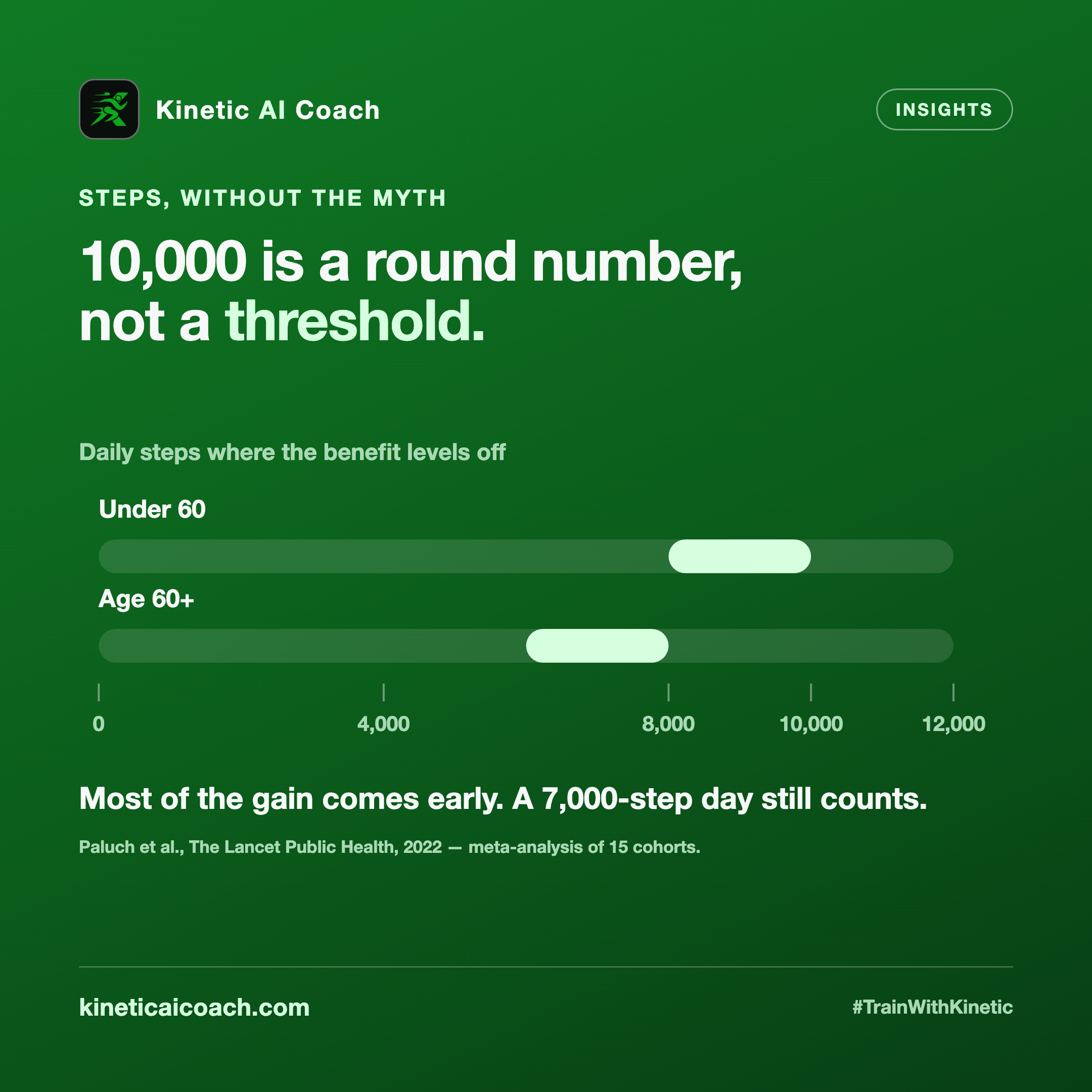
The research tells a more forgiving story. A 2022 meta-analysis in The Lancet Public Health pooled data from fifteen studies and tracked how the risk of dying early changed as daily step counts rose. The pattern was not a cliff at ten thousand. Risk fell steadily with every additional step, then the benefit levelled off — at roughly 6,000 to 8,000 steps a day for adults aged 60 and over, and roughly 8,000 to 10,000 for adults under 60.
Two things follow from that. First, the first steps matter most: the biggest gains come from moving out of a very sedentary day, not from squeezing the last thousand out of an already active one. Second, there is no moral failure in a 7,000-step day. A day that gets you most of the way is worth far more than the zero you record when you decide the target is out of reach.
Steps are also only one slice of the picture. Walking does not replace strength work, which protects muscle and bone, and it is no stand-in for the structured sessions that move a specific goal forward. Think of steps as the floor under your week and training as what you build on it.
Kinetic AI Coach builds that structure around the time and energy you actually have — the short session, the travel week, the day the plan has to bend — so progress rests on what you can repeat, not on a round number. Aim for the range, not the myth.